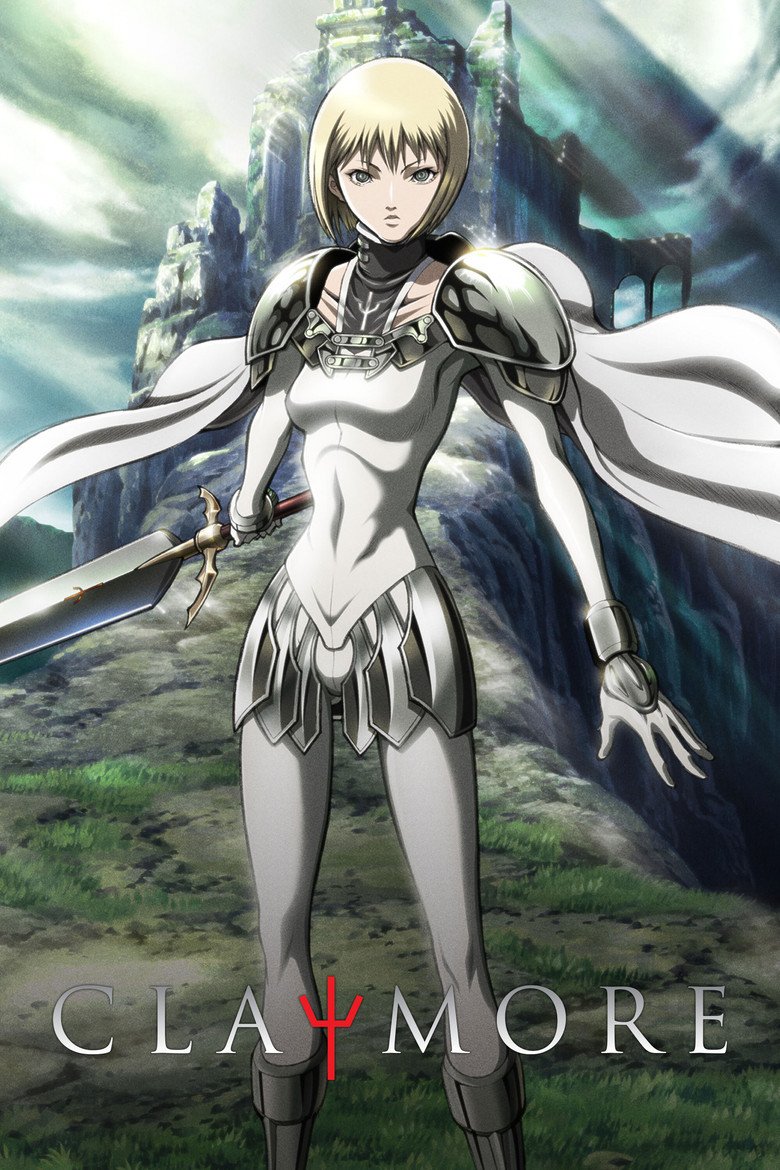
CLAYMORE
This one feels like it came from the same nightmare as Attack on Titan, just ten years earlier.
Claymore, two thousand seven. Available on Crunchyroll.
Half-human, half-monster warriors are sent to hunt the creatures that prey on humans. They are feared by the people they protect. They are expendable to the organization that created them. Sound familiar? The world is medieval, brutal, and constantly dangerous. Clare, the protagonist, has a coldness to her that makes her compelling from the first episode. Her backstory, when it arrives, will break you.
The action is visceral and creative. The monster designs are legitimately unsettling. But the show’s real strength is its exploration of what it means to carry something monstrous inside you and still choose to fight for others. The mid-series revelation about the organization controlling these warriors reframes every interaction before it. This is an older show and it looks it, but the storytelling is sharp, the characters are memorable, and if you want that specific mixture of body horror, corruption, and sacrificial heroism that Attack on Titan perfected, this is essential.
DORORO
This one is about reclaiming what was taken from you, and it earns every single moment of that journey.
Dororo, twenty nineteen. Available on Amazon Prime Video.
A samurai lord sells his son’s body parts to demons before the child is even born. The child survives, grows up with a body of weapons and no conventional senses, and hunts the demons to take himself back. Each demon he kills returns another piece of his humanity. The setup sounds mechanical. What it actually is, is devastating.
Every episode adds complexity. When Hyakkimaru begins to recover his senses, the show spends real time on what that means. Hearing human voices for the first time. Seeing color. And then, as he gets closer to being whole, the cost of that wholeness to the people around him becomes the actual story. Midway through the series, the show forces a confrontation between his need to exist and the lives that depend on the deal his father made. There is no clean answer. The show doesn’t pretend there is. If you admired how Attack on Titan refused to give you a comfortable ideology to root for, this one does the same thing with considerably more heartbreak.
TOKYO GHOUL
This next show gives you the complete arc of watching someone try to stay human in a world that keeps telling them they aren’t.
Tokyo Ghoul, twenty fourteen. Available on Crunchyroll.
Kaneki Ken is a normal college student. One bad date changes everything. He becomes half-ghoul, which means he is now hunted by both humans and distrusted by ghouls. He doesn’t fit anywhere. He doesn’t want to hurt anyone. And the show spends its first season watching him try to hold onto that, and watching the world punish him for it.
The mid-season confrontation, a long interrogation sequence that lasts multiple episodes, is one of the most psychologically intense things in anime. It is not easy to watch. But it completely transforms Kaneki, and the final episode of season one delivers one of the most iconic visual moments in the medium. The later seasons decline in quality so season one is the jewel here. Watch it for what it is: a precise, painful story about identity, survival, and what you lose when the world forces you to become something you swore you never would.
TRANSITION HOOK
One left. And I promised you an underrated one. This is the one almost nobody talks about when this conversation comes up, and that is a genuine mistake.
DECA-DENCE
This last one hides what it actually is, and that mystery is exactly why it belongs here.
Deca-Dence, twenty twenty. Available on Crunchyroll.
A young girl lives inside a mobile fortress. Outside, creatures called Gadoll roam and kill. She trains to fight. She has big dreams and a broken arm and the kind of stubborn energy that makes her immediately likable. For an episode and a half, you will think you know exactly what this show is.
Then it tells you what it actually is, and the genre shifts completely. It is one of the most surprising reveals in recent anime, and it recontextualizes everything. But here’s what makes it earn its place at the end of this list: after the reveal, the show becomes about systemic oppression on a massive scale. About who decides what lives matter. About how people in impossible situations find reasons to keep fighting. About whether hope is rational. This is a show that takes Attack on Titan’s core questions, who builds the walls and why, what are the walls really for, and builds its own entire world around them. It only got one season. It deserved more. It tells a complete story anyway. Watch it before someone spoils the twist.
ENDING
Twelve shows. All of them earn your time. But if you’re walking away with just one name from this list, make it either Vinland Saga if you want the most emotionally mature experience, or Deca-Dence if you want to feel the walls-and-monsters premise hit you completely fresh.
Attack on Titan built something rare. A story that made you care about freedom and then showed you the price. Every show on this list is chasing some version of that. Some of them get close in different ways. None of them are the same. That’s the point.
On Thursday, we’re covering what to watch if Jujutsu Kaisen is your obsession. The list includes some deep cuts that most recommendation channels completely miss. Be there.
Related Collectibles
- Claymore — collectibles & merch
- Dororo — collectibles & merch
- Tokyo Ghoul — collectibles & merch
- Deca-Dence — collectibles & merch
See the full list in the original video
About the Author